Star Bathing: Reconnecting with the Healing Power of the Night Sky
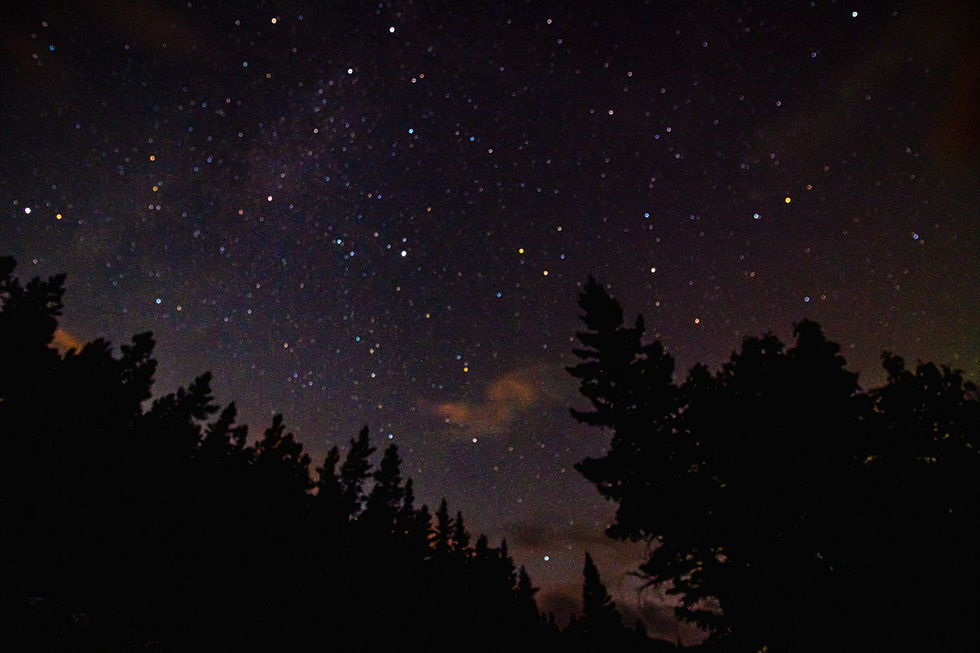
In a world lit too brightly and moving too fast, there is an ancient practice waiting quietly in the shadows—inviting us to slow down, look up, and remember. It’s called star bathing, and it may be one of the most accessible, transformative, and overlooked forms of nature-based wellness.
What is Star Bathing?
Much like forest bathing (Shinrin-yoku), star bathing is the intentional practice of immersing oneself in the night sky. It’s not about astrology or astronomy—though it may lead you there. Star bathing is a sensory-rich, contemplative experience that invites stillness, wonder, and reconnection.
To star bathe is to:
Lie beneath the stars with your senses wide open
Allow darkness to be healing, not scary
Feel small—but held—within a vast, beautiful universe
Reclaim nighttime as a space of restoration, ritual, and reflection
The Science & Spirit of Darkness
Modern life is dominated by artificial light and overstimulation. Studies show that light pollution and screen exposure not only disrupt sleep and circadian rhythms, but also sever our connection to natural cycles. Yet exposure to true darkness and natural night skies has measurable mental and physical benefits:
Melatonin restoration: Crucial for immune function and hormonal balance
Nervous system regulation: Natural darkness supports rest-and-digest states
Stress relief and awe: Starry skies elicit feelings of humility and wonder, building emotional resilience
For many cultures across time, stargazing has not only been science—it has been ceremony. From navigation to storytelling, prayer to planting, the stars were a map for living in right relationship with the Earth.
A Practice of Belonging
At 365 with Nature, we believe healing is relational—to land, to community, to culture, and to self. Star bathing restores something ancestral. It’s an act of remembering that you are part of a greater whole.
You don’t have to travel far or buy anything. You just have to look up.
And for communities long excluded from safe, accessible, and culturally grounded nature experiences, star bathing offers a low-barrier way to connect with nature—whether from a backyard, rooftop, balcony, or sidewalk.
Nature connection belongs to everyone. So do the stars.
How to Start Star Bathing
You don’t need special equipment—just a willingness to slow down and be present.
Here’s how to begin:
Find a spot with as little artificial light as possible. Even darker corners of cities or local parks can work.
Bring a blanket, yoga mat, or chair. Make it cozy. Let it be sacred.
Turn off or silence your phone. Digital darkness supports real rest.
Lie back, breathe, and gaze. Soften your focus. Let the sky become a canvas of curiosity.
Engage your senses. Listen to crickets. Smell the night air. Feel the coolness on your skin.
Be still. Journal. Pray. Wonder. Let your experience unfold with no expectation.
Start with just 10 minutes. Over time, it can become a healing ritual of emotional grounding, grief processing, spiritual expansion, or creative renewal.
Star Bathing as Environmental Advocacy
When we reconnect to the stars, we begin to care about protecting the night sky. Light pollution affects:
Migratory birds and pollinators
Nocturnal wildlife
Human sleep, hormones, and mental health
The ability to pass down cultural star stories and celestial traditions
Advocating for dark sky preservation—including motion-sensitive lighting, community stargazing events, and accessible nighttime green spaces—is part of our work at 365 with Nature.
In Summary: The Stars Are Still Speaking
In a world so often overwhelmed by noise, the stars whisper what we’ve forgotten:
You belong. You are part of something vast and wise. You don’t have to do anything but show up and see.
Star bathing is a gentle revolution—a way to reclaim rest, ritual, and reconnection under the same sky our ancestors once looked to for guidance and grounding.
We invite you to step into the night. Let your body remember. Let the stars do their quiet work.


